
A tear in the rotator cuff can make everyday movements feel uncertain, from reaching into a cabinet to lifting something light. It’s natural to worry that exercise could worsen the injury, yet the right approach can actually support healing and stability. With careful technique and thoughtful progressions, it’s possible to strengthen the shoulder without placing unnecessary stress on the damaged tendon, and even reduce the likelihood of needing shoulder surgery in the future.
Understanding What a “Safe” Shoulder Workout Really Means
When the rotator cuff is partially torn or weakened, strengthening isn’t about pushing through discomfort or loading the joint aggressively. A safe workout focuses on creating a controlled environment for the shoulder to move without irritation. This means prioritizing smooth, pain-free motion, improving posture, and activating muscles that help guide the shoulder blade. Good mechanics reduce strain on the injured tendon and help prevent further tearing.
Building Scapular Stability as a Foundation
Before directly strengthening the rotator cuff, the surrounding structures, especially the shoulder blade, need to function well. As a starting point, a scapular stability exercise program often begins with gentle retraction work, allowing the shoulder blades to glide back and down while maintaining relaxed neck muscles. From there, controlled wall-slide movements help train upward rotation without shrugging, while light prone movements such as “Y” and “T” patterns encourage the mid-back muscles to engage smoothly. Performed slowly and with minimal resistance, this type of program teaches the scapula to anchor and support the rotator cuff, reducing the friction and strain commonly felt during shoulder motion.
Strengthening the Rotator Cuff Without Overloading It
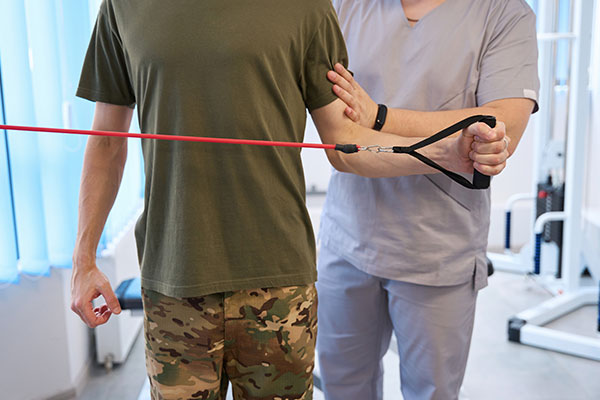
Once scapular control improves, the shoulder is better prepared for targeted rotator cuff strengthening. A rotator cuff exercise program typically begins with slow isometric contractions, allowing the tendons to activate without moving through painful ranges. As tolerance builds, gentle external rotation with a lightweight band, performed with the elbow tucked against the body, encourages precise cuff activation. Small-range abduction or internal rotation exercises can follow, always guided by comfort rather than intensity. This gradual progression builds endurance and support around the shoulder joint without forcing the tendon into vulnerable positions. Over time, such a program restores the fine motor control needed for stable movement in daily life.
Avoiding Motions That Aggravate or Stress the Tear
Certain positions and activities naturally increase tension on a torn tendon. Heavy overhead lifting, wide-grip pressing motions, and sudden, jerking movements can all aggravate the shoulder. Avoiding or modifying these motions protects the healing tissue and allows strengthening to be productive rather than harmful. Paying attention to early warning signs, like catching, pinching, or sudden weakness, ensures the exercises stay within a safe range.
Supporting the Shoulder With Balanced Strength
A rotator cuff tear affects the entire shoulder complex, not just the injured tendon. Other muscles often compensate, which can lead to imbalances. Strengthening the upper back, core, and surrounding shoulder muscles helps distribute load more evenly and improves overall movement quality. When the body works in harmony, the injured tendon experiences less strain during both exercise and everyday activities.
When to Seek Guidance From a Shoulder Specialist
If discomfort persists despite careful strengthening, or if weakness and instability are worsening, it may be time to consult a shoulder specialist. A surgeon experienced in shoulder surgery can determine whether continued conservative care is appropriate or whether advanced minimally invasive arthroscopic treatment options might offer better long-term results.
If you’re unsure which strengthening techniques are appropriate for your specific injury, Dr. Shah can help you navigate your options and choose the safest, most effective path.
AUTHOR: Anup Shah, MD, MBA, FAAOS is a board-certified, fellowship-trained Sports Medicine Orthopedic surgeon specializing in Knee and Shoulder Surgery in Phoenix, Arizona at Banner Health. Dr. Shah uses a patient-centric and evidence-based approach to help his patients achieve their desired goals.


