
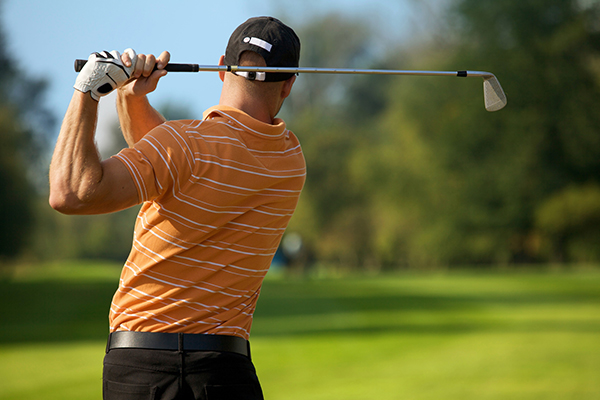
Golf and tennis are often categorized as low-impact sports, and in many ways that label is accurate. But low-impact does not mean low-demand on the shoulder. Both sports place the joint under significant repetitive rotational stress, and over time that stress accumulates in predictable ways. When shoulder pain develops in a golfer or tennis player, it is rarely random. The anatomy of the sport maps almost directly onto the anatomy of the injury. Here is what is actually happening inside the joint when these athletes start to hurt.
Why Golf and Tennis Are Hard on the Shoulder
The shoulder is the most mobile joint in the body, which also makes it the least inherently stable. It relies on the rotator cuff, labrum, and surrounding musculature to maintain function through an enormous range of motion. Golf and tennis both demand that this system perform thousands of repetitions of high-velocity, end-range movement across a season, often with technique patterns that load vulnerable structures repeatedly in the same way.
In golf, the lead shoulder takes the greatest load during the downswing and follow-through. In tennis, the serving motion places the shoulder in extreme external rotation before rapidly accelerating through internal rotation at ball contact. Over time, these mechanics wear on specific structures in predictable locations.
Rotator Cuff Injuries in Golfers and Tennis Players
The rotator cuff is the most commonly injured structure in overhead and rotational athletes. In golfers, rotator cuff damage tends to develop gradually through repetitive strain rather than a single traumatic event. The lead shoulder is more vulnerable in right-handed golfers due to the compression forces at impact and the deceleration demands in the follow-through.
In tennis players, the posterior rotator cuff bears significant eccentric load during the deceleration phase of the serve and overhead stroke. Partial thickness tears, tendinopathy, and full-thickness tears can all develop in this population. Arthroscopic rotator cuff repair is typically considered when conservative care has not resolved symptoms and imaging confirms structural damage that is limiting function.
SLAP Tears and Labrum Damage in Overhead Athletes
The labrum is a cartilage ring that deepens the shoulder socket and serves as an anchor point for the biceps tendon. SLAP tears, which involve the superior portion of the labrum where the biceps attach, are particularly common in athletes who perform repetitive overhead or throwing-pattern motions.
Tennis players are at elevated risk due to the serve mechanics described above. Golfers can also develop labral pathology, particularly at the lead shoulder, from the rotational demands at impact. SLAP repair is an arthroscopic procedure that reattaches the torn labrum to the glenoid rim, and it is often performed alongside treatment of coexisting biceps tendon pathology.
Shoulder Instability
Some athletes, particularly younger tennis players with hypermobile connective tissue or those who have experienced shoulder dislocations, develop chronic instability rather than isolated tendon or labrum damage. When the labrum and supporting ligaments have been disrupted enough that standard soft tissue repair is unlikely to hold under the demands of sport, a more robust reconstruction option may be considered.
Orthobiologics as Part of the Recovery Equation
For athletes managing tendinopathy or partial tears who are not yet surgical candidates, orthobiologics including PRP and bone marrow aspirate concentrate (BMAC) offer a non-surgical pathway to support tissue healing and reduce inflammation. These approaches are increasingly integrated into the management of rotator cuff tendinopathy and labral irritation in athletic populations.
If shoulder pain is affecting your golf swing or your ability to serve and play overhead, a consultation with a sports medicine orthopedic specialist can identify the specific structural source and map out the right treatment path. Dr. Shah sees patients throughout the Phoenix and Scottsdale area and works with athletes across all levels of competition.
Frequently Asked Questions
What shoulder injuries are most common in golfers?
Rotator cuff tears and tendinopathy are the most frequently seen shoulder injuries in golfers, particularly affecting the lead shoulder. Labral tears, biceps tendon pathology, and acromioclavicular joint irritation are also common. Most injuries develop gradually through repetitive strain rather than a single traumatic event, which is why many golfers delay evaluation until symptoms become disruptive.
Can you play tennis with a rotator cuff tear?
Some athletes with partial rotator cuff tears can continue playing with appropriate management, including activity modification, physical therapy, and in some cases orthobiologics like PRP. Full-thickness tears, particularly those causing significant weakness or pain with overhead activity, often require surgical repair to restore reliable function for the demands of tennis. A sports medicine evaluation with imaging is the most accurate way to determine what your specific tear allows.
What is a SLAP tear and how does it affect tennis players?
A SLAP tear involves damage to the superior labrum at the point where the biceps tendon anchors to the shoulder socket. In tennis players, the extreme external rotation and rapid internal rotation of the serve place high stress on this structure over time. Symptoms typically include deep joint pain, clicking or catching, and sometimes a loss of velocity or control on overhead strokes. Arthroscopic SLAP repair is the surgical treatment when conservative care has not resolved the problem.
What is the Latarjet procedure and when is it needed for athletes?
The Latarjet procedure is used to treat shoulder instability when the bone and soft tissue of the shoulder socket have been damaged enough that standard labrum repair is unlikely to provide durable stability. It involves transferring a small piece of the coracoid bone along with its attached tendon to the front of the glenoid, rebuilding both the bony rim and the soft tissue sling. It is more commonly needed in athletes with recurrent dislocations or significant bone loss than in those with isolated labral tears.
Is PRP effective for rotator cuff injuries in golfers and tennis players?
PRP, or platelet-rich plasma, is used to support healing in rotator cuff tendinopathy and some partial tears by delivering concentrated growth factors to the injured tissue. Evidence for its use in tendinopathy is growing, and many sports medicine specialists include it as part of a non-surgical management plan before considering arthroscopic intervention. It is not a substitute for surgical repair of full-thickness structural tears but can be a meaningful option in the appropriate clinical context.
Reference Links:
- Rotator Cuff Injuries in Tennis Players - PubMed
- Golf and upper limb injuries: a summary and review of the literature - PubMed Central
AUTHOR: Anup Shah, MD, MBA, FAAOS - Sports Medicine Orthopedic Surgeon
Anup Shah, MD, MBA, FAAOS is a board-certified, fellowship-trained Sports Medicine Orthopedic surgeon specializing in Knee and Shoulder Surgery in Phoenix, Arizona at Banner Health. Dr. Shah uses a patient-centric and evidence-based approach to help his patients achieve their desired goals.
Credentials & Recognition
Dr. Shah completed an Orthopedic Sports Medicine Fellowship at Baylor College of Medicine and a Shoulder and Elbow Fellowship at Harvard Medical School/Massachusetts General Hospital. He also earned a Master of Business Administration from Rice University. A fellow of the American Academy of Orthopaedic Surgeons with a Certificate of Added Qualification in Sports Medicine, Dr. Shah has authored more than 30 peer-reviewed articles and book chapters and presents nationally and internationally. He remains active in research and education through leadership and committee roles in the American Orthopaedic Society for Sports Medicine and the American Shoulder and Elbow Society and serves as Associate Fellowship Director and Clinical Scholar Facilitator at Banner University Medical Group.
Clinical Expertise
Dr. Shah specializes in minimally invasive arthroscopic surgery of the knee and shoulder, including ACL reconstruction and PCL reconstruction, meniscus and cartilage restoration, patellar instability, knee preservation and revision surgery, rotator cuff and SLAP tear repair, shoulder instability and dislocation treatment, clavicle fractures, shoulder replacement, and complex shoulder reconstruction. He currently serves as a team physician for the Phoenix Suns and Milwaukee Brewers and as head team physician for Paradise Valley and Barry Goldwater High Schools, providing comprehensive sports
Medical Disclaimer: This information is for educational purposes only and does not constitute medical advice. For diagnosis and treatment recommendations, please consult with your healthcare provider.
Content authored by Dr. Anup Shah and verified against official sources.


