
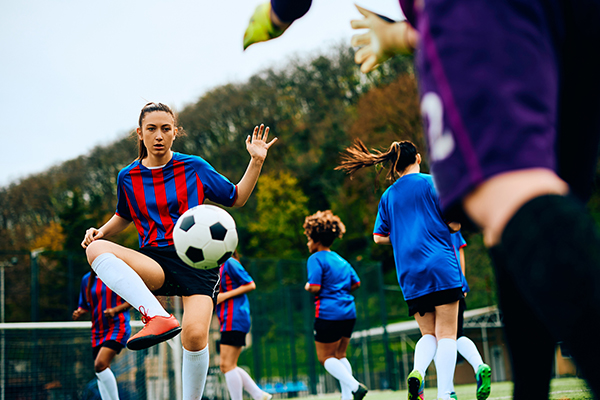
Summer in Arizona does not slow athletes down. If anything, the off-season energy, travel sports schedules, and year-round outdoor activity culture means knees are under significant demand all twelve months of the year. The ACL, one of the primary stabilizing ligaments of the knee, is also one of the most commonly torn structures in active people of all ages. When it gives way, the event is usually unmistakable and the path forward raises a lot of questions fast. Here is what Arizona athletes and active patients should understand about ACL tears from injury through recovery.
What the ACL Does and Why It Tears
The anterior cruciate ligament runs diagonally through the center of the knee, connecting the femur to the tibia and controlling rotational stability and forward translation of the lower leg. It is most vulnerable during cutting, pivoting, landing from a jump, or sudden deceleration, movements that are central to soccer, basketball, volleyball, tennis, and recreational sports of almost every variety.
ACL tears are frequently non-contact injuries. A plant-and-cut movement or an awkward landing is often all it takes. The injury typically produces an audible or felt pop, followed by rapid swelling, instability, and an inability to continue activity. Some patients also experience partial tears, which present with less dramatic initial symptoms but still require careful evaluation.
Heat, Fatigue, and ACL Risk in Summer Sports
Arizona's summer heat introduces factors that are worth understanding from an injury prevention standpoint. Fatigue is one of the most consistent risk factors for ACL injury, and heat accelerates the rate at which neuromuscular control degrades during activity. As muscles fatigue, the dynamic stabilization they provide to the knee diminishes, leaving the ACL to absorb more load than it was designed to handle alone.
Hydration status also affects neuromuscular function. Athletes training or competing in high heat who are not adequately hydrated show measurable decrements in coordination and reaction time, both of which matter for the landing and cutting mechanics that protect the ACL. This does not mean avoiding summer activity, but it does mean that warm-up quality, session length, and hydration management are genuinely relevant to injury risk in this climate.
ACL Reconstruction: What the Surgery Actually Involves
For athletes who want to return to cutting and pivoting sports, ACL reconstruction is typically the recommended course of treatment. The torn ligament is replaced with a graft, most commonly taken from the patellar tendon, hamstring tendon, or a donor source, which is then anchored into bone tunnels in the femur and tibia and gradually incorporates over the following months.
Graft choice is a decision made between patient and surgeon based on activity level, sport demands, age, and anatomical factors. Younger athletes in high-demand pivot sports often do well with autograft options. The procedure is performed arthroscopically, meaning the surgical access is minimally invasive and recovery from the incisions themselves is relatively straightforward. The more significant recovery commitment is the rehabilitation process that follows.
Meniscus and Cartilage Injuries That Accompany ACL Tears
ACL tears do not always occur in isolation. The medial meniscus in particular is frequently injured at the same time, either through direct trauma at the moment of the ACL injury or through the instability that follows an untreated tear. Cartilage damage is also possible.
When meniscal tears are identified alongside an ACL injury, they are typically addressed arthroscopically at the time of reconstruction. Meniscal repair, where the tissue is stitched back together rather than removed, is preferred when the tear pattern and tissue quality allow it, as preserving meniscal tissue protects long-term knee health significantly.
If you have experienced a knee injury this summer and suspect an ACL tear, early evaluation matters. Dr. Shah sees patients throughout Phoenix and Scottsdale and can provide imaging, diagnosis, and a clear treatment plan tailored to your activity goals and timeline.
Frequently Asked Questions
How do I know if I tore my ACL or just sprained my knee?
A complete ACL tear typically produces a pop at the moment of injury, followed by rapid swelling within the first few hours, significant instability when trying to walk or pivot, and an inability to continue activity. Sprains without structural damage tend to produce less swelling and more functional capacity immediately after. That said, partial ACL tears and other ligament injuries can present similarly, and an MRI is the most accurate way to confirm the diagnosis.
Can an ACL tear heal without surgery?
Some patients, particularly those with partial tears or lower activity demands, can manage without surgical reconstruction. However, a complete ACL tear does not heal on its own because the ligament lacks the blood supply needed for self-repair. Athletes who want to return to cutting, pivoting, or contact sports almost universally require reconstruction to regain reliable knee stability. Non-surgical management is more appropriate for older patients with lower functional demands who are willing to modify their activity permanently.
How long does ACL reconstruction recovery take?
Return to sport after ACL reconstruction typically takes nine to twelve months for athletes in cutting and pivoting sports. The biological process of graft incorporation, called ligamentization, takes the majority of that time regardless of how quickly strength and range of motion are regained. Returning too early before the graft has matured significantly increases re-tear risk, which is why timeline decisions should be based on functional and biological milestones rather than calendar dates alone.
What happens if a meniscus tear is found alongside an ACL tear?
When a meniscal tear is identified at the time of ACL reconstruction, it is typically addressed during the same surgical procedure. The treatment depends on the tear pattern and tissue quality. Tears in the outer vascular zone of the meniscus are candidates for repair, while tears in the inner avascular zone where healing is not possible may require partial resection. Preserving as much meniscal tissue as possible is the goal, as the meniscus plays an important role in load distribution and long-term joint health.
Are younger athletes at higher risk for ACL tears?
Younger athletes in cutting and pivoting sports are among the highest-risk groups for ACL injury, particularly adolescent female athletes who have consistently shown higher ACL tear rates than their male counterparts across multiple sports. The reasons involve a combination of anatomical, hormonal, and neuromuscular factors. ACL injury prevention programs that focus on landing mechanics, hip and core strengthening, and neuromuscular training have demonstrated meaningful reductions in tear rates in high-school and collegiate athletic populations.
Reference Links:
AUTHOR: Anup Shah, MD, MBA, FAAOS - Sports Medicine Orthopedic Surgeon
Anup Shah, MD, MBA, FAAOS is a board-certified, fellowship-trained Sports Medicine Orthopedic surgeon specializing in Knee and Shoulder Surgery in Phoenix, Arizona at Banner Health. Dr. Shah uses a patient-centric and evidence-based approach to help his patients achieve their desired goals.
Credentials & Recognition
Dr. Shah completed an Orthopedic Sports Medicine Fellowship at Baylor College of Medicine and a Shoulder and Elbow Fellowship at Harvard Medical School/Massachusetts General Hospital. He also earned a Master of Business Administration from Rice University. A fellow of the American Academy of Orthopaedic Surgeons with a Certificate of Added Qualification in Sports Medicine, Dr. Shah has authored more than 30 peer-reviewed articles and book chapters and presents nationally and internationally. He remains active in research and education through leadership and committee roles in the American Orthopaedic Society for Sports Medicine and the American Shoulder and Elbow Society and serves as Associate Fellowship Director and Clinical Scholar Facilitator at Banner University Medical Group.
Clinical Expertise
Dr. Shah specializes in minimally invasive arthroscopic surgery of the knee and shoulder, including ACL reconstruction and PCL reconstruction, meniscus and cartilage restoration, patellar instability, knee preservation and revision surgery, rotator cuff and SLAP tear repair, shoulder instability and dislocation treatment, clavicle fractures, shoulder replacement, and complex shoulder reconstruction. He currently serves as a team physician for the Phoenix Suns and Milwaukee Brewers and as head team physician for Paradise Valley and Barry Goldwater High Schools, providing comprehensive sports
Medical Disclaimer: This information is for educational purposes only and does not constitute medical advice. For diagnosis and treatment recommendations, please consult with your healthcare provider.
Content authored by Dr. Anup Shah and verified against official sources.


