Accessibility Tools
  • The Role of Nutrition and Joint Health in Rotator Cuff Injury Recovery

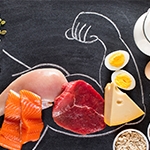
    The Role of Nutrition and Joint Health in Rotator Cuff Injury Recovery

    Recovering from a rotator cuff injury isn’t just about rest and rehab - what you eat matters, too.

  • How Age Impacts Rotator Cuff Injuries and Treatment Options

    How Age Impacts Rotator Cuff Injuries and Treatment Options

    Rotator cuff injuries are a common cause of shoulder pain, especially as we age.

  • What’s the Difference Between a Partial and Full-Thickness Rotator Cuff Tear?

    What’s the Difference Between a Partial and Full-Thickness Rotator Cuff Tear?

    Unlike the more prominent deltoid muscles that get all the attention, the rotator cuff works quietly behind the scenes, stabilizing your shoulder and enabling smooth movement.

  • Rotator Cuff Injuries in Winter Athletes: Signs, Symptoms, and When to Seek Treatment

    Rotator Cuff Injuries in Winter Athletes: Signs, Symptoms, and When to Seek Treatment

    Winter sports, from skiing to snowboarding, require mobility and strength in your shoulders.

  • Early Signs of ACL Injury: How to Recognize and Address Potential Problems While Skiing

    Early Signs of ACL Injury: How to Recognize and Address Potential Problems While Skiing

    Skiing is an adrenaline-packed adventure, but those thrilling twists, turns, and jumps can take a toll on your knees—particularly your ACL

FirstPrevious | Pages 1 [2] 3 4 5 of 5 | Next | Last
  • Picture of University of Arizona
  • Picture of American Shoulder And Elbow Surgeons
  • Picture of American Orthopaedic Society for Sports Medicine
  • Picture of American Academy of Orthopaedic Surgeons
  • Picture of Phoenix Suns
  • Picture of Milwaukee Brewers
  • Picture of Harvard Medical School
  • Picture of Baylor College of Medicine
  • Picture of University of Texas Health Science Center - San Antonio