
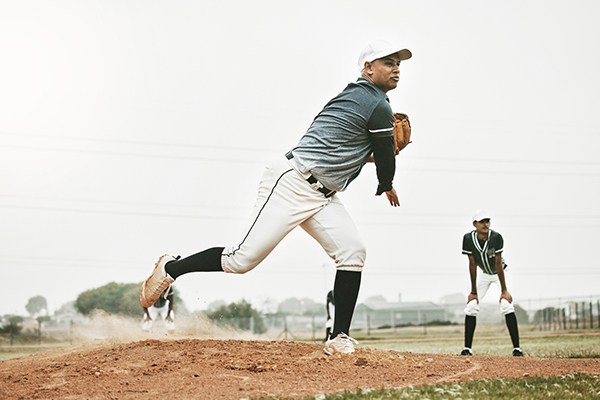
The roar of the crowd or the drive to beat a personal best often pushes athletes to "gut it out" when a shoulder starts to ache. However, that nagging twinge in your rotator cuff or the clicking during a serve may be more than just a temporary inconvenience. Let’s look at what the latest sports medicine research reveals about the risks of playing through shoulder pain.
The Risks of Playing Through Shoulder Pain in Athletes
Evidence on Delayed Intervention: Research shows early arthroscopic repair (within 3 months) of traumatic rotator cuff injuries yields superior functional outcomes, better range of motion, lower pain, and reduced re-tear rates compared to delayed repair. Delayed repair is associated with higher re-tear rates.1
Tear Progression in Athletes: Partial-thickness rotator cuff tears in overhead athletes can progress to full-thickness under repetitive high-load or tensile stress, such as deceleration in throwing, due to microinstability and overload.2
Beyond the tendon itself, playing through pain often leads to muscle atrophy and fatty degeneration. Research indicates that once muscle tissue begins to be replaced by fat, even with a perfect mechanical fix, the "engine" of the shoulder may never regain its original horsepower.3
Compensatory Mechanics: Why One Shoulder Injury Affects the Entire Arm
The shoulder is a complex, shallow ball-and-socket joint that relies heavily on dynamic stabilizers. When one structure is injured, the body naturally compensates by altering biomechanics. For example, a pitcher with a labral tear might unconsciously change their release point, placing excessive stress on the medial collateral ligament of the elbow.
Red Flags That Your Shoulder Pain Is More Than Soreness
Here are certain "red flags" indicate that your shoulder pain requires an immediate professional evaluation:
- Night Pain: A deep, dull ache that prevents sleep or awakens you is a classic sign of rotator cuff pathology.
- The "Dead Arm" Sensation: Sudden weakness or a feeling that the arm is paralyzed after a throw often points to a labral or nerve issue.
- Mechanical Catching: If the joint clicks, pops, or "locks" during specific movements, it suggests a mechanical obstruction like a torn labrum or loose body.
Return-to-Play Guidelines for Shoulder Injuries
The goal of modern sports medicine is not just to stop the pain, but to restore the durability needed for your specific sport. Return to play should be based on load tolerance rather than just the absence of symptoms. This involves a phased approach:
- Restoration of full passive range of motion.
- Correction of "scapular dyskinesis" (improper shoulder blade movement).
- Graduated strengthening of the rotator cuff and periscapular muscles.
Protecting Your Athletic Longevity
Your shoulder is the most mobile joint in the body, which also makes it one of the most vulnerable, especially in overhead and contact sports. Playing through persistent symptoms may preserve short-term participation, but it can compromise strength, stability, and tissue integrity over time. Recognizing early warning signs and responding appropriately is one of the most effective ways to protect long-term performance and joint health.
Frequently Asked Questions (FAQs)
Is it ever safe to play through mild shoulder pain?
Mild muscle soreness after an intense workout can be normal. However, sharp pain, weakness, instability, or pain that changes your mechanics is not “normal soreness.” If symptoms persist beyond a few days, worsen with activity, or affect performance, continuing to play may increase the risk of structural injury.
How do I know if my shoulder pain is a rotator cuff tear?
Common signs of a rotator cuff injury include pain when lifting the arm overhead, weakness with external rotation, night pain, and discomfort when lying on the affected side. A definitive diagnosis typically requires a physical examination and, in some cases, advanced imaging such as an MRI to assess the extent of tendon involvement.
What happens if I delay treatment for a shoulder injury?
Delaying evaluation may allow small tears or areas of inflammation to progress. Research shows that untreated rotator cuff tears can enlarge over time and may lead to muscle atrophy and fatty degeneration, which can negatively affect long-term strength and surgical outcomes. Early assessment allows for more treatment options, including non-surgical management.
Can shoulder pain go away without surgery?
Yes. Many shoulder conditions, including tendinitis, bursitis, and some partial-thickness tears, respond well to conservative treatment. This may include rest, activity modification, physical therapy, anti-inflammatory strategies, and, in select cases, biologic or injection-based therapies. Surgery is typically reserved for significant structural damage or failure of non-operative care.
What is the typical recovery timeline after shoulder surgery?
Recovery depends on the specific procedure and severity of injury. Arthroscopic procedures often allow for earlier mobility, while tendon repairs require a protected healing phase followed by progressive rehabilitation. Return to sport can range from several months to longer for high-demand overhead athletes, depending on tissue healing and strength restoration.
Should I stop playing immediately if I feel a “pop” in my shoulder?
A sudden pop accompanied by pain, weakness, or instability should not be ignored. This may indicate a labral tear, tendon injury, or dislocation event. Continuing to play in this situation can worsen damage. Prompt medical evaluation is recommended.
What does “return-to-play clearance” actually mean?
Return-to-play clearance is not based solely on being pain-free. It involves demonstrating full range of motion, restored strength (especially in the rotator cuff and scapular stabilizers), proper biomechanics, and sport-specific load tolerance. Objective functional testing helps reduce reinjury risk.
When should I see a sports medicine specialist?
You should seek evaluation if your pain lasts longer than one to two weeks, interferes with sleep, causes weakness, limits range of motion, or affects athletic performance. Early diagnosis allows for personalized treatment planning and may help prevent long-term joint damage.
Hear From Our Patients
Choosing the right orthopedic care is a personal decision, and hearing from others who have been in your position can be helpful. To better understand our approach to personalized, patient-centered orthopedic care explore some of our patient testimonials.
Reference Links:
- Comparison of functional outcomes following early and delayed arthroscopic repair for traumatic and non-traumatic rotator cuff injuries - PubMed
- Treatment of Partial Thickness Rotator Cuff Tears in Overhead Athletes - PubMed Central
- Effect of Preoperative Fatty Degeneration of the Rotator Cuff Muscles on the Clinical Outcome of Patients With Intact Tendons After Arthroscopic Rotator Cuff Repair of Large/Massive Cuff Tears - Sage Journals
AUTHOR: Anup Shah, MD, MBA, FAAOS - Sports Medicine Orthopedic Surgeon
Anup Shah, MD, MBA, FAAOS is a board-certified, fellowship-trained Sports Medicine Orthopedic surgeon specializing in Knee and Shoulder Surgery in Phoenix, Arizona at Banner Health. Dr. Shah uses a patient-centric and evidence-based approach to help his patients achieve their desired goals.
Credentials & Recognition
Dr. Shah completed an Orthopedic Sports Medicine Fellowship at Baylor College of Medicine and a Shoulder and Elbow Fellowship at Harvard Medical School/Massachusetts General Hospital. He also earned a Master of Business Administration from Rice University. A fellow of the American Academy of Orthopaedic Surgeons with a Certificate of Added Qualification in Sports Medicine, Dr. Shah has authored more than 30 peer-reviewed articles and book chapters and presents nationally and internationally. He remains active in research and education through leadership and committee roles in the American Orthopaedic Society for Sports Medicine and the American Shoulder and Elbow Society and serves as Associate Fellowship Director and Clinical Scholar Facilitator at Banner University Medical Group.
Clinical Expertise
Dr. Shah specializes in minimally invasive arthroscopic surgery of the knee and shoulder, including ACL reconstruction and PCL reconstruction, meniscus and cartilage restoration, patellar instability, knee preservation and revision surgery, rotator cuff and SLAP tear repair, shoulder instability and dislocation treatment, clavicle fractures, shoulder replacement, and complex shoulder reconstruction. He currently serves as a team physician for the Phoenix Suns and Milwaukee Brewers and as head team physician for Paradise Valley and Barry Goldwater High Schools, providing comprehensive sports
Medical Disclaimer: This information is for educational purposes only and does not constitute medical advice. For diagnosis and treatment recommendations, please consult with your healthcare provider.
Content authored by Dr. Anup Shah and verified against official sources.


